Source organic red grape powder for Food, Medicine, and Cosmetics
Compare 30 listings for organic red grape powder from verified suppliers. Buyers can review specifications like purity, assay methods, and certifications including FDA and ISO for applications in food, health care, and cosmetics.
Key considerations
Products List




Comprehensive Sourcing Guide
Strategic Sourcing Guide for Organic Red Grape Powder
Navigating the global market for organic red grape powder requires a disciplined approach that balances botanical authenticity with rigorous supply chain verification. For procurement professionals, the distinction between generic fruit powders and specific organic extracts is critical, as the value proposition hinges on the integrity of the source material and the precision of the extraction process. This guide synthesizes available market data to provide a framework for evaluating suppliers, verifying technical specifications, and ensuring compliance with international standards without relying on unverified claims.
Technical Specifications and Product Attributes
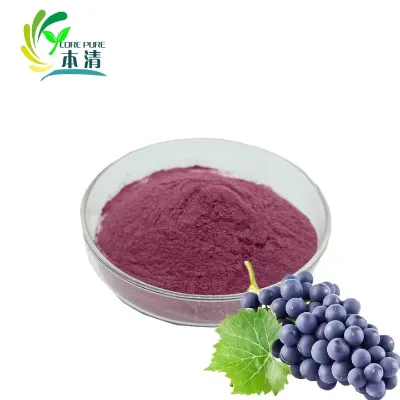
The foundational step in sourcing organic red grape powder is the precise definition of technical specifications. Market observations indicate that this product category is characterized by a distinct physical appearance, typically described as a light purple to dark red powder. The specific hue is a direct indicator of the anthocyanin content and the variety of grape used, ranging from standard grape powder to more concentrated extracts like grape seed extract, which may present as a brown-red powder. Buyers must verify the specific form factor, as the market offers variations including powder, paste, and liquid forms, though the powder form remains the standard for dry blending applications.
A critical technical parameter is the assay method used to verify potency. Reliable suppliers employ advanced analytical techniques such as High-Performance Liquid Chromatography (HPLC), Gas Chromatography (GPC), and HPLC-MS to quantify active compounds. For grape seed extracts, the assay often focuses on procyanidin content, with observed purity levels reaching up to 95% in specific high-grade variants. In contrast, general fruit powders may list purity at 99%, though this figure requires context regarding what constitutes the "active" fraction versus the total dry matter. The mesh size is another vital specification, with 80 mesh being a common standard for ensuring proper solubility and flowability in downstream manufacturing processes.
The ingredient profile is another area requiring scrutiny. While the primary ingredient is naturally derived from the grape, some products may be fortified with vitamins or other botanicals. Procurement teams must distinguish between pure fruit powder and multi-ingredient blends. The specific model or product code, such as L007 or specific purity ratings like 99% or 95%, serves as a unique identifier for the batch and formulation. These codes are essential for traceability and ensuring that the exact specification ordered matches the material delivered.
Compliance and Certification Verification
In the B2B landscape, certification is not merely a marketing asset but a prerequisite for market access, particularly in the food, pharmaceutical, and cosmetic sectors. The supply chain for organic red grape powder is heavily regulated, and buyers must demand evidence of compliance with major international standards. Observed certifications in this sector frequently include HACCP, FDA, ISO, BRC, and RoHS. These certifications indicate that the supplier adheres to strict hygiene protocols, food safety management systems, and restrictions on hazardous substances.
For products intended for export to specific regions, additional verification is necessary. The presence of ISO 9001 certification suggests a commitment to quality management systems, while the availability of a Certificate of Analysis (COA) and Material Safety Data Sheet (MSDS) is non-negotiable for industrial buyers. These documents provide the empirical data required to validate the product's safety and composition. Furthermore, the "Food Grade" designation is a standard classification, but for organic claims, buyers must verify specific organic certifications which may not be explicitly listed in general product descriptions but are essential for premium positioning.
The origin of the product is a significant compliance factor. Data indicates that a substantial portion of this supply originates from China. While this does not inherently imply lower quality, it necessitates a deeper due diligence process regarding the supplier's ability to meet the specific regulatory requirements of the destination market. Buyers should verify that the supplier's certifications are valid and current, and that they cover the specific manufacturing sites used for the product.
Cost Drivers and Pricing Dynamics
Understanding the cost structure of organic red grape powder is essential for budgeting and negotiation. The observed price range in the market spans from $1 to $218 per unit, a variance that reflects differences in purity, extraction method, packaging, and order volume. The primary cost driver is the concentration of active ingredients. A standard fruit powder with 99% purity will generally command a different price point than a highly concentrated grape seed extract with 95% procyanidin content. The extraction process itself, particularly if it involves solvent-free or organic methods, adds significant production costs that are passed on to the buyer.
Packaging and logistics also influence the final cost. Standard packaging includes 25kg drums, foil bags, and vacuum-packed units. The choice of packaging affects the unit price; for instance, smaller retail-ready packages like 10g or 100g bags will have a higher per-unit cost compared to bulk industrial drums. The Minimum Order Quantity (MOQ) is another critical cost factor. Market data shows MOQs ranging from 1kg to 25kg, with some suppliers offering samples as low as 10-20g. Buyers must balance the need for inventory flexibility against the economies of scale offered by larger orders.
Lead times and stock availability further impact the total cost of ownership. Suppliers with immediate stock may charge a premium for convenience, while those operating on a make-to-order basis might offer lower prices but require a lead time of approximately one week. Buyers should factor in these variables when calculating the total landed cost, including shipping and potential tariffs.
Typical Applications and Formulation Compatibility
Organic red grape powder is a versatile ingredient with applications spanning the food, beverage, health care, and cosmetic industries. In the food sector, it is utilized as a natural colorant and flavor enhancer, leveraging its light purple to red appearance to create visually appealing products without synthetic dyes. The powder form is particularly advantageous for dry mixes, where it can be easily blended into smoothies, protein bars, and confectionery.
The health care sector represents a significant application area, particularly for supplements targeting cardiovascular health and antioxidant support. In this context, the specific formulation of the powder is crucial. Products intended for capsules and tablets require a powder with excellent flow properties and consistent particle size. For liquid applications, such as lotions or injections, the solubility and stability of the extract are paramount. The market also observes applications in paste and suppository forms, indicating the material's adaptability to various dosage forms.
Cosmetic applications utilize the antioxidant properties of the grape extract to formulate anti-aging creams and serums. The specific application form, whether it be a lotion or a direct ingredient in a formulation, dictates the required purity and particle size. Buyers must ensure that the selected product specification aligns with the intended end-use, as a powder suitable for a dry capsule may not be ideal for a liquid cosmetic emulsion without further processing.
Supplier Evaluation and Quality Control
Evaluating suppliers requires a systematic approach that goes beyond surface-level marketing claims. Buyers should prioritize suppliers who demonstrate transparency in their sourcing and manufacturing processes. The ability to provide detailed test results via HPLC, GPC, and HPLC-MS is a strong indicator of a supplier's technical capability. These methods allow for the precise quantification of active compounds and the detection of contaminants, ensuring that the product meets the specified purity levels.
Quality control protocols should be a central part of the supplier evaluation. Buyers must verify that the supplier maintains a robust quality management system, evidenced by certifications like ISO and HACCP. The storage conditions are also critical; products should be stored in cool and dry places to maintain stability and prevent degradation. The shelf life of the product, typically observed as two years, should be clearly stated and validated through stability testing.
When assessing potential partners, buyers should request samples to conduct internal quality checks. The availability of samples, ranging from 10-20g to 25kg, allows for a practical evaluation of the product's physical properties, such as color, odor, and solubility. It is also essential to verify the supplier's ability to handle customization requests, as many buyers require specific formulations or packaging solutions to meet their unique product requirements.
Long-Term Procurement Considerations
Sourcing organic red grape powder is not a one-time transaction but a long-term strategic partnership. Buyers must consider the scalability of the supply chain to ensure that the supplier can meet increasing demand without compromising quality. The ability to maintain consistent specifications across different batches is crucial for product consistency in the end market.
Sustainability and ethical sourcing are becoming increasingly important in the procurement of organic ingredients. Buyers should inquire about the agricultural practices used to grow the grapes, ensuring that they align with organic standards and do not involve harmful pesticides or fertilizers. The environmental impact of the packaging and logistics should also be evaluated, with a preference for suppliers who utilize eco-friendly packaging solutions.
Finally, buyers should establish clear communication channels and contractual agreements that define quality standards, delivery timelines, and dispute resolution mechanisms. The flexibility of the supplier to adapt to changing market conditions and regulatory requirements will be a key determinant of the long-term success of the procurement relationship. By focusing on these strategic factors, buyers can secure a reliable supply of high-quality organic red grape powder that supports their business objectives and brand reputation.
FAQs
What certifications do organic red grape powder suppliers typically hold?
Suppliers typically hold HACCP, FDA, ISO, BRC, and RoHS certifications. Some also provide ISO 9001, COA, MSDS, and TDS documents. These certifications verify compliance with food safety and quality management standards required for export.
How is the purity of grape seed extract verified?
Purity is verified using advanced assay methods like HPLC, GPC, and HPLC-MS. Observed purity levels reach up to 95% for procyanidin content in grape seed extracts. General fruit powders may list purity at 99% depending on the specific formulation.
Which packaging options are available for bulk orders?
Available packaging includes 25kg drums, foil bags, and vacuum-packed units. Smaller retail options like 10g or 100g bags are also offered. Standard specifications often list 25kg per drum for industrial applications.
Can suppliers customize the product specifications for my needs?
Yes, customization is available for specific formulation or packaging requirements. Buyers can request different mesh sizes or purity levels. Suppliers often provide samples ranging from 10g to 25kg for testing before full orders.
What is the typical lead time for delivery?
The typical lead time is approximately one week for stock items. Some suppliers may require longer periods for custom orders. Immediate stock availability allows for faster fulfillment compared to make-to-order production cycles.
How should organic red grape powder be stored?
The product must be stored in a cool and dry place to maintain stability. Proper storage prevents degradation and ensures the two-year shelf life. Moisture control is critical for preserving the powder's physical properties.
What are the common applications for this ingredient?
Common applications include food, health care products, and cosmetics. It is used in capsules, tablets, pastes, and lotions. The powder serves as a natural colorant and antioxidant source in various formulations.